Team
Edenred
Shipped
Q2 2023
Tags
Strategy
Refactor
Summary
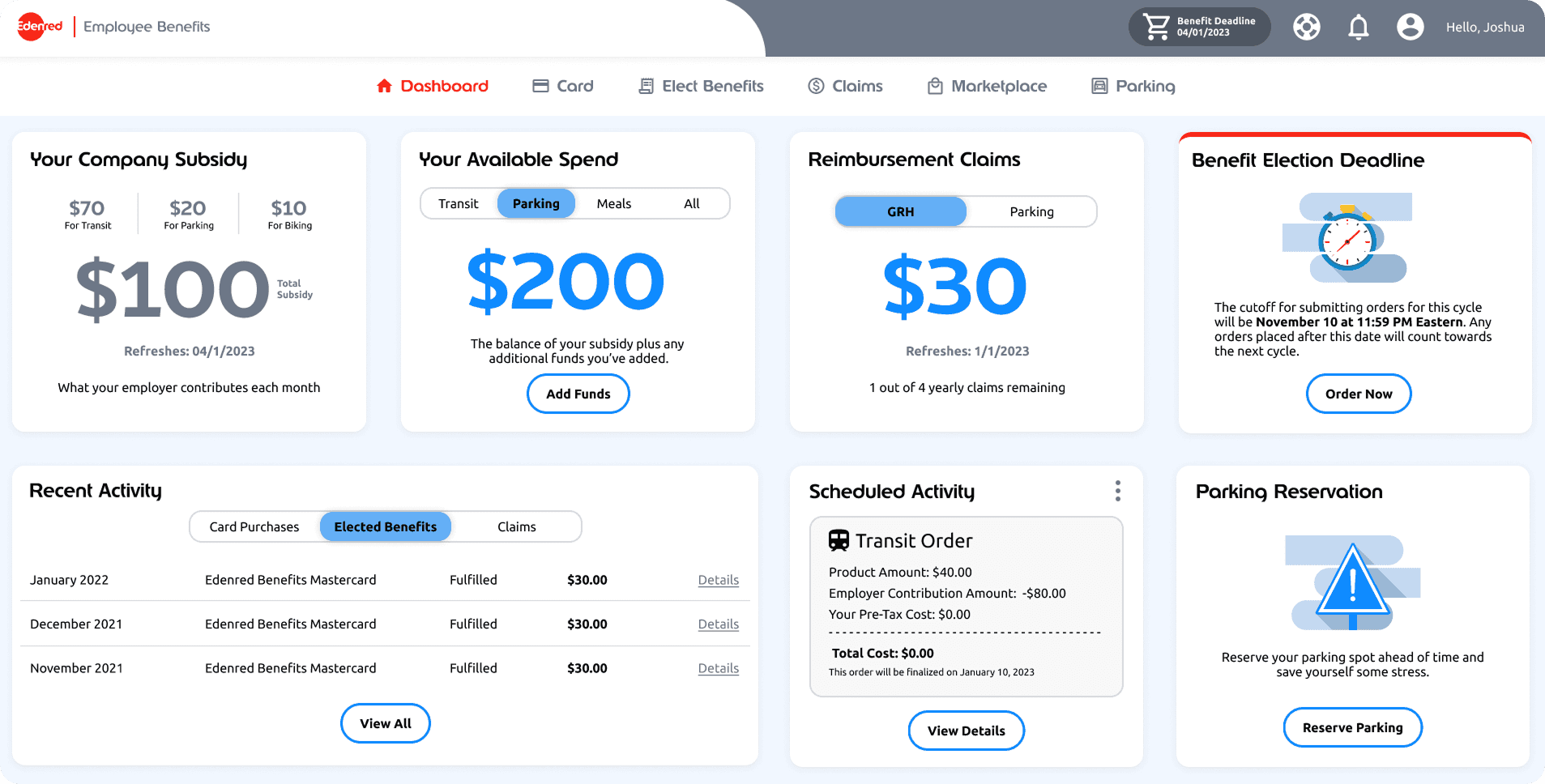
I led the consolidation of multiple fragmented commuter products into a single, cohesive platform, backed by a new design system. This overhaul simplified workflows, reduced administrative overhead, increased demo requests, and directly contributed to winning the Google contract.
The problem
Edenred’s commuter benefits offering was a patchwork of stand-alone applications with inconsistent workflows, design patterns, and technical constraints. That meant:
Inefficient, multi-step workflows frustrated customers
Disjointed engineering slowed feature delivery
QA issues popped up due to lack of component standards
Lost cross-sell and upsell opportunities
Compromised ability to pitch new enterprise clients, including Google
We needed a unified platform that was coherent, scalable, and demonstrably polished for enterprise clients.
"Do we keep all of our different apps separate or do we unify them into a single platform?"
One of the BIG decisions we needed to make was do we keep the different apps we have separate (with consistent UXs) or do we unify them into a single application?




Consolidate and conquer
The solution
We faced two paths:
Incrementally improve each standalone app (low-risk, slow impact)
Consolidate everything under a single platform with a shared design system (high-risk, high reward)
We chose consolidation. It addressed systemic issues, enabled scalable growth, and gave us a platform that could be marketed to enterprise clients like Google.
What went right
Once we got engineering onboard, we whipped out UIs pretty fast with the new design system.
We got a TON of new interest from customers once we had some early prototypes ready to show.
Lots of great feedback from customers who were eager for the updates we were providing.
Tough spots
Getting engineering on board
Finding all of the flow edge cases
We "lost the plot" a few times and deviated too far from the core flows we needed to preserve.
How we solved it
2 Months
Discovery phase
1
Design team size
23
Unique stakeholders
I started by auditing every commuter product, cataloging functionality, and mapping end-to-end user flows to understand inconsistencies and overlaps. FigJam became our central workspace for visualizing opportunities and guiding decisions.
Key actions
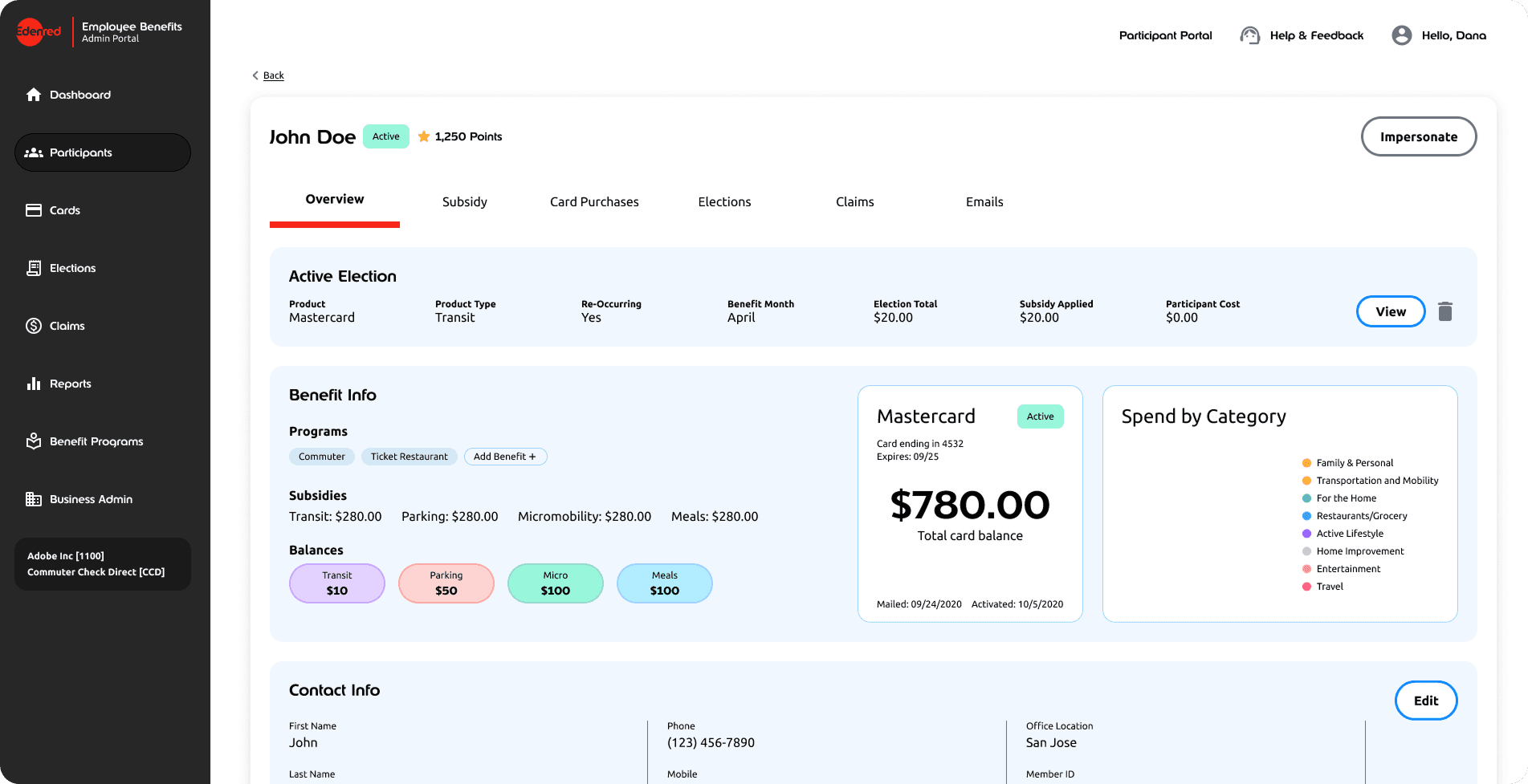
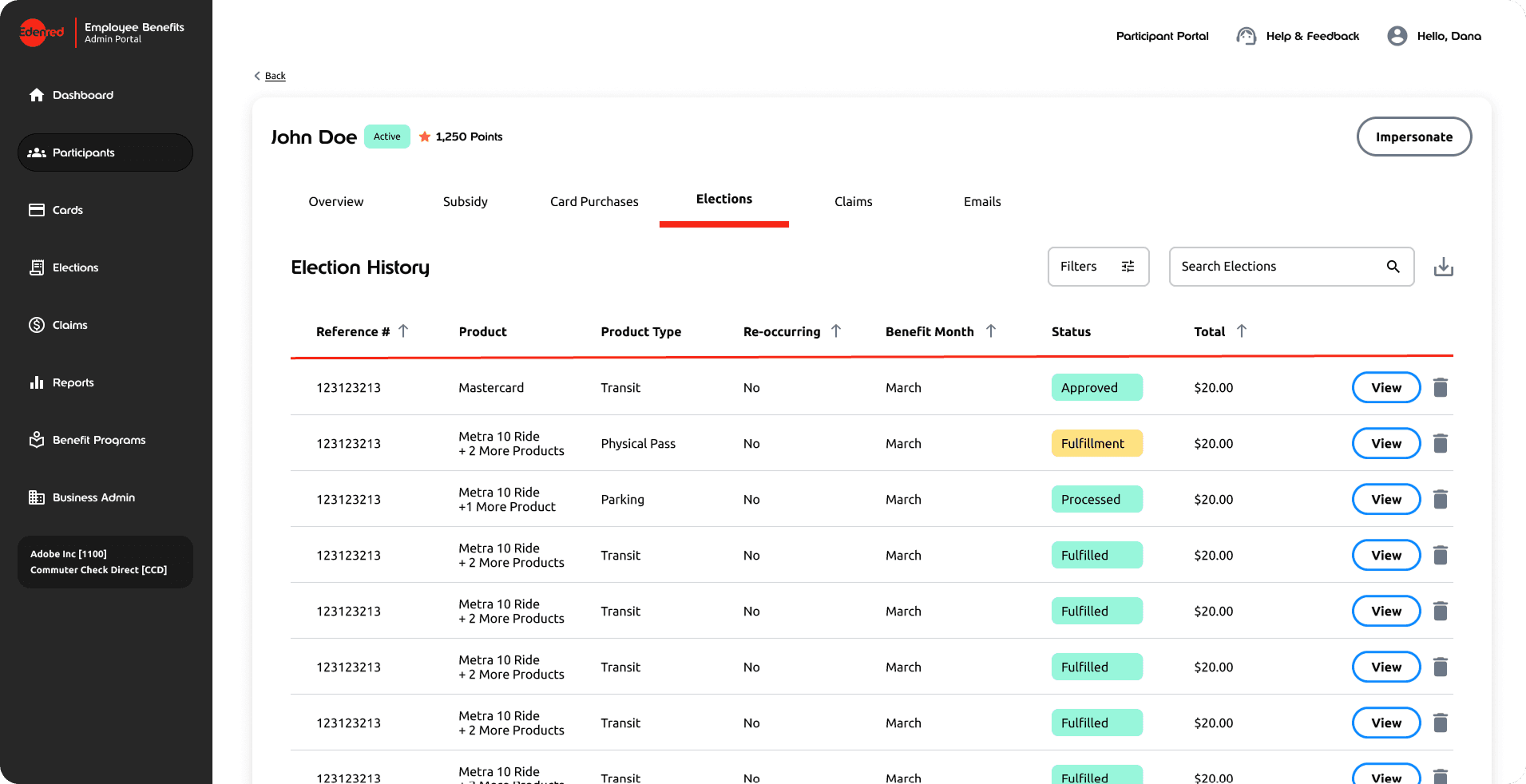
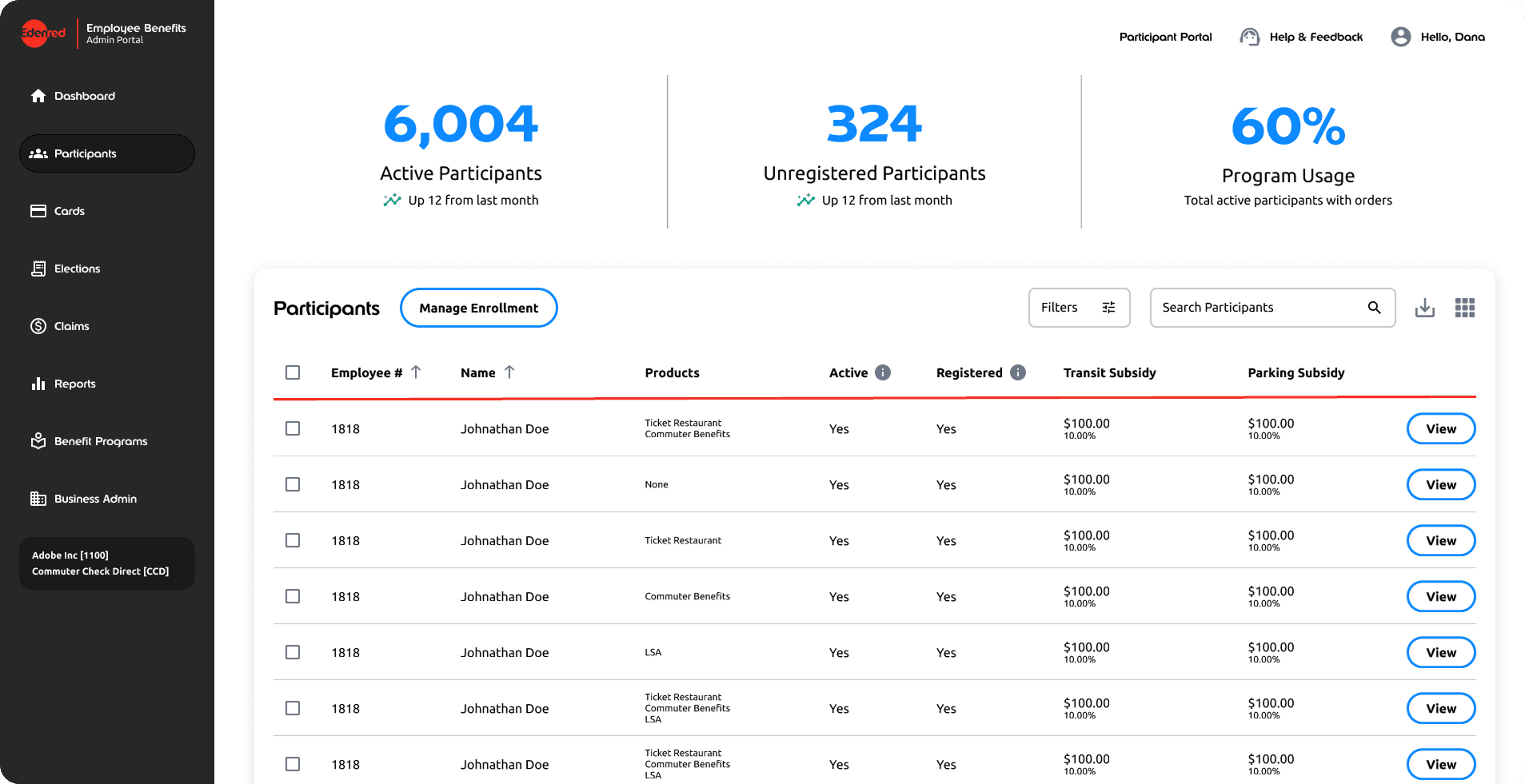
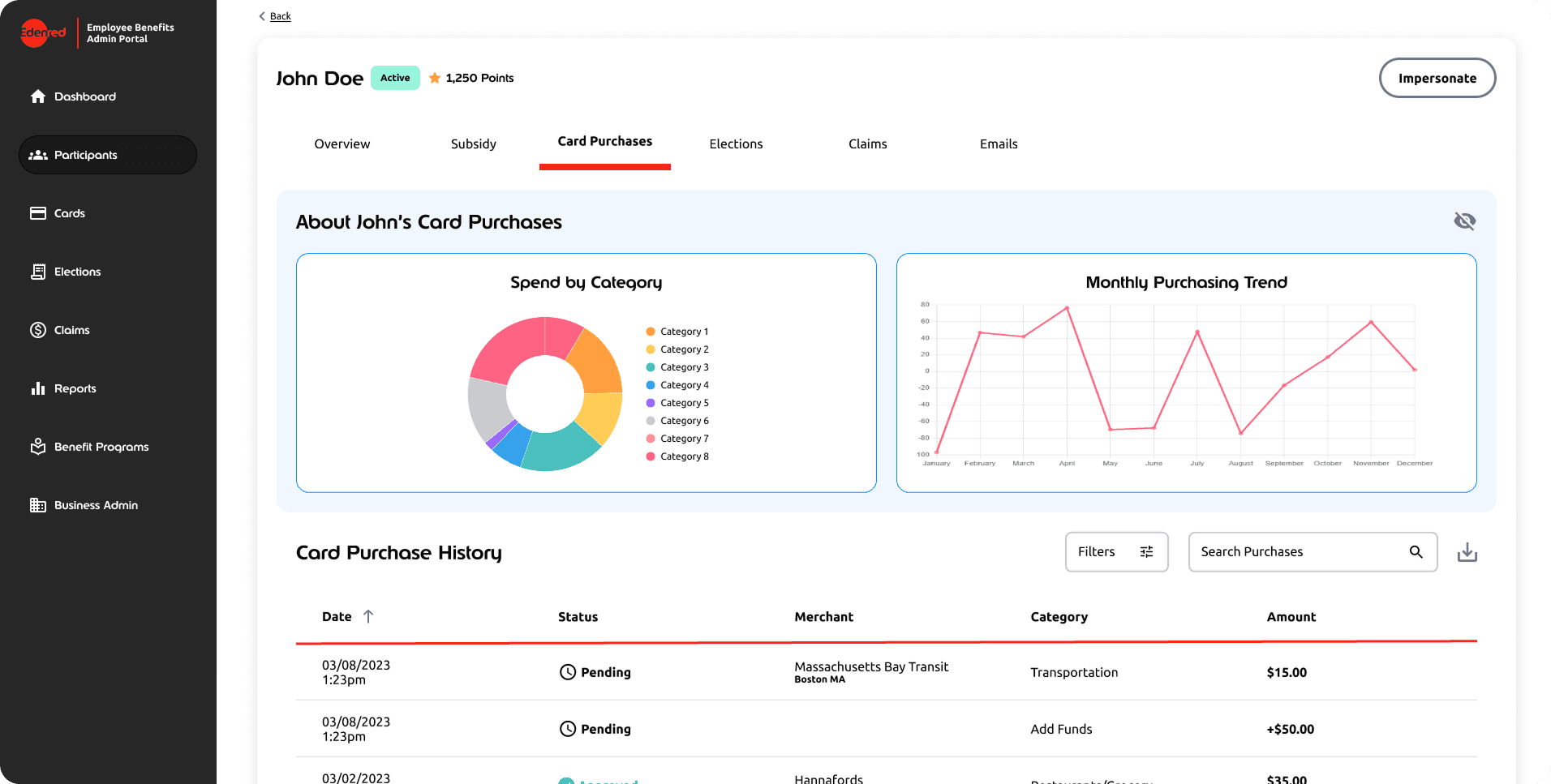
Platform shell design: Created a shared interface capable of hosting all commuter applications under a single cohesive experience.
Workflow integration: Reworked individual workflows and wove them together into unified flows.
Design system creation: Enforced visual and interaction consistency across the platform.
Engineering collaboration: Anchored decisions on long-term scalability while balancing technical feasibility.
Validation & iteration: Tested low-fidelity flows with internal stakeholders and customers, iterated multiple rounds, then moved to high-fidelity designs.
Tiered rollout: Launched the customer-facing portal first, then administrative interfaces, reducing risk and validating flows in production.
The result: simplified workflows, stronger demos, reduced admin overhead, a scalable foundation, and a positive boost in demo requests.
Lessons learned
Move decisively from discovery to iteration
Engage engineering early—their feedback is critical
Avoid big internal “reveals”; incremental alignment surfaces issues
Communicate with customers ahead of major changes