Team

Edenred
Shipped
Q2 2022
Tags
0 -> 1
Strategy
Summary
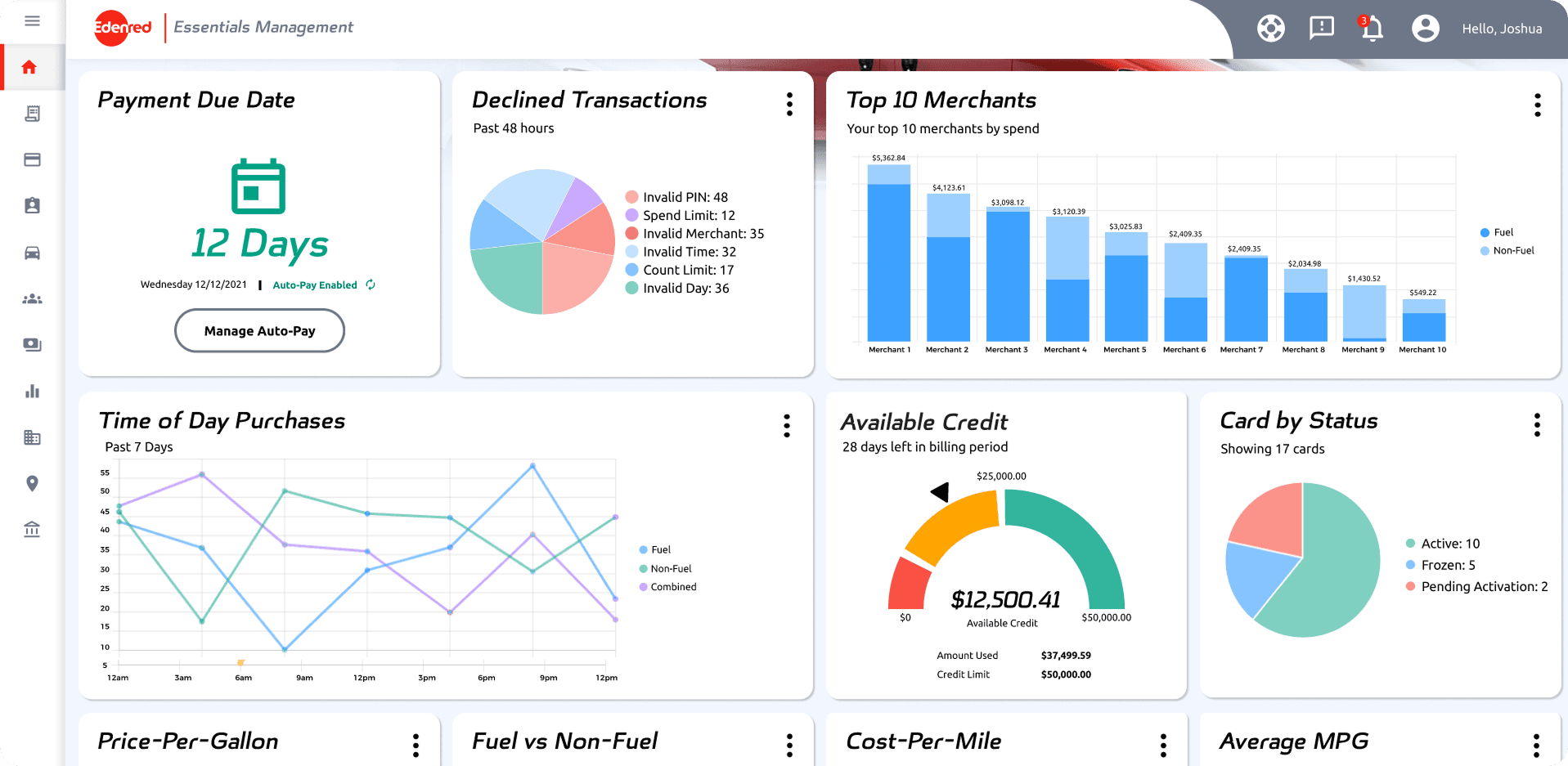
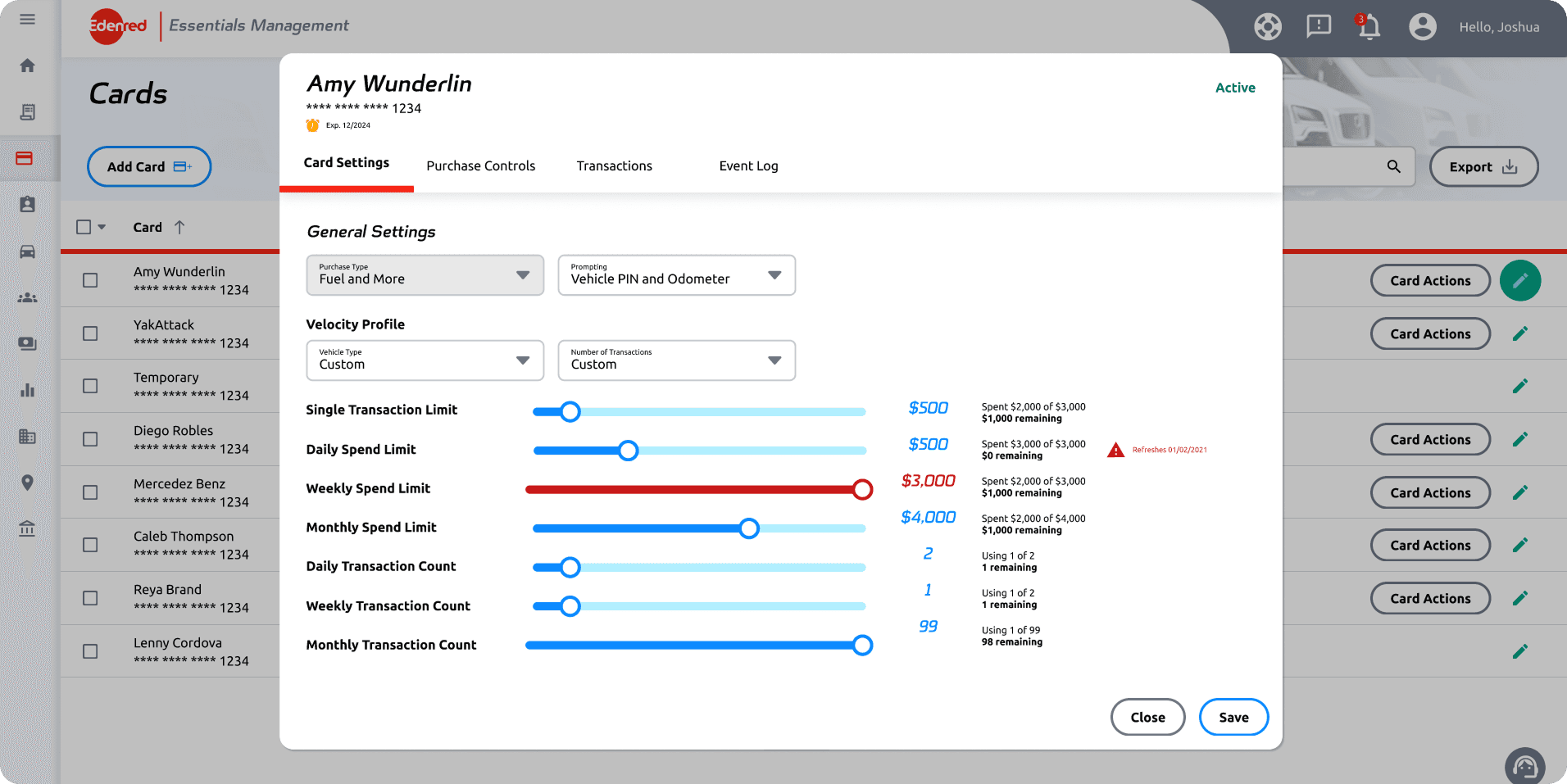
I designed and launched Edenred USA’s first Fleet Card platform, taking it from concept to live in 13 months. Built with VISA, it enabled real-time spending controls, helped Edenred enter a market dominated by three incumbents, and converted 200+ U.S. businesses.
The problem
Edenred wanted to break into a highly competitive Fleet Card market. Success required:
A net-new platform from scratch
Integration with the Commuter Benefits ecosystem
Support for a strategic VISA partnership
A launch under two years
"Where do we draw the line for what MVP means?"
Its always a challenge to know when enough is enough for a new product. We had no shortage of ambition, but our deadline was fast approaching and we needed to zero in on what MVP should look like in order to get it out in the world on time.




Get the customers spending in the platform

The solution
Defined the scalable design system (including code components) and aligned engineering on front-end frameworks before building screens. This prevented rework and ensured consistency across customer and admin experiences.
Built a flexible platform shell capable of housing all fleet workflows while supporting future expansion.
Scoped features into 2-week cycles for iterative design, with early validation from engineering and VISA to minimize risk.
What went right
We moved FAST and shipped on time.
We set a new standard for the company on how new products can be built/launched.
We built a solid foundation for future products.
Tough spots
We missed some features that we thought could wait for post MVP that customers really needed.
Engineering handoffs were BRUTAL here. There was a lack of front-end expertise and it really bit us in the butt.
How we solved it
13 Months
From concept to launch
1
Design team size
~2 Weeks
Avg time per feature
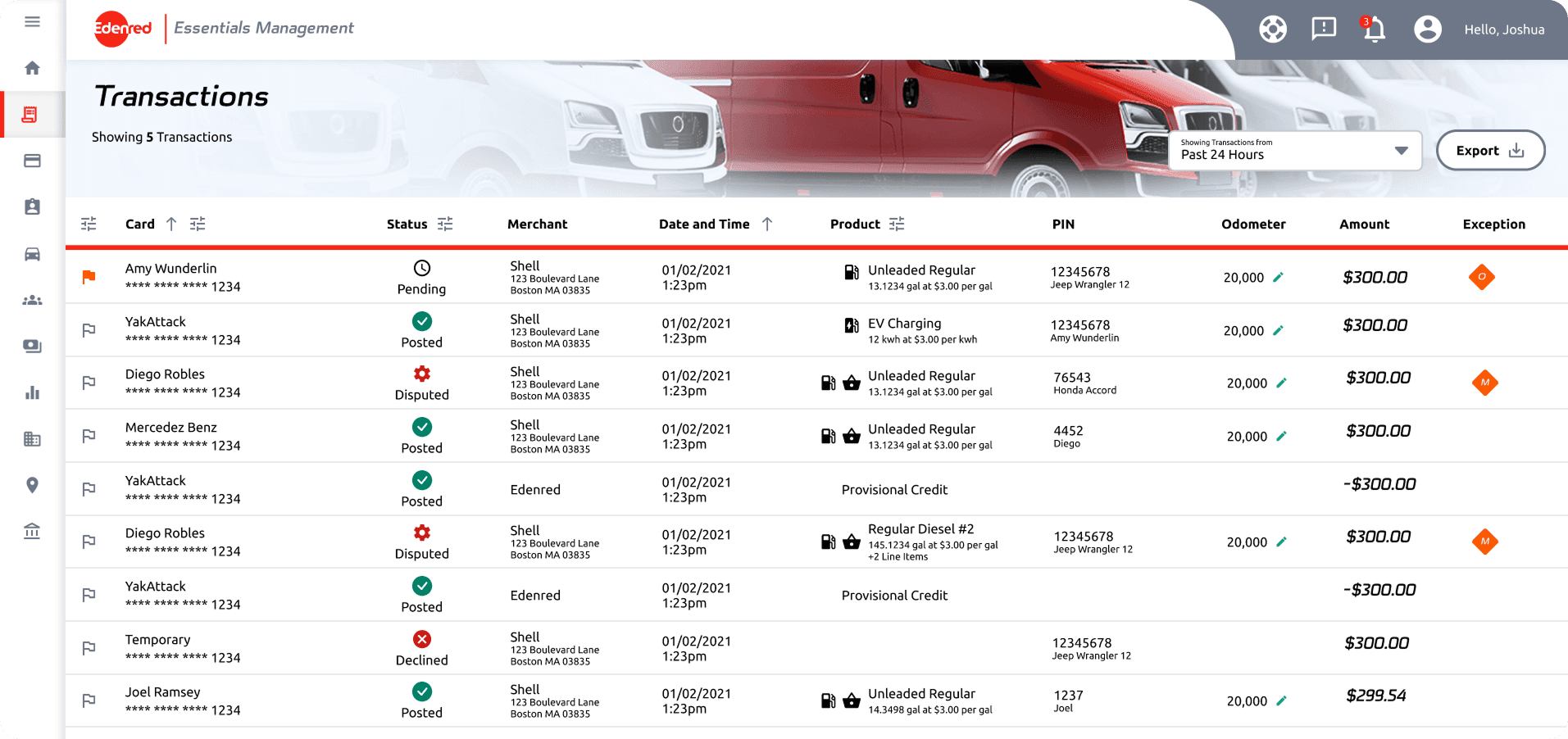
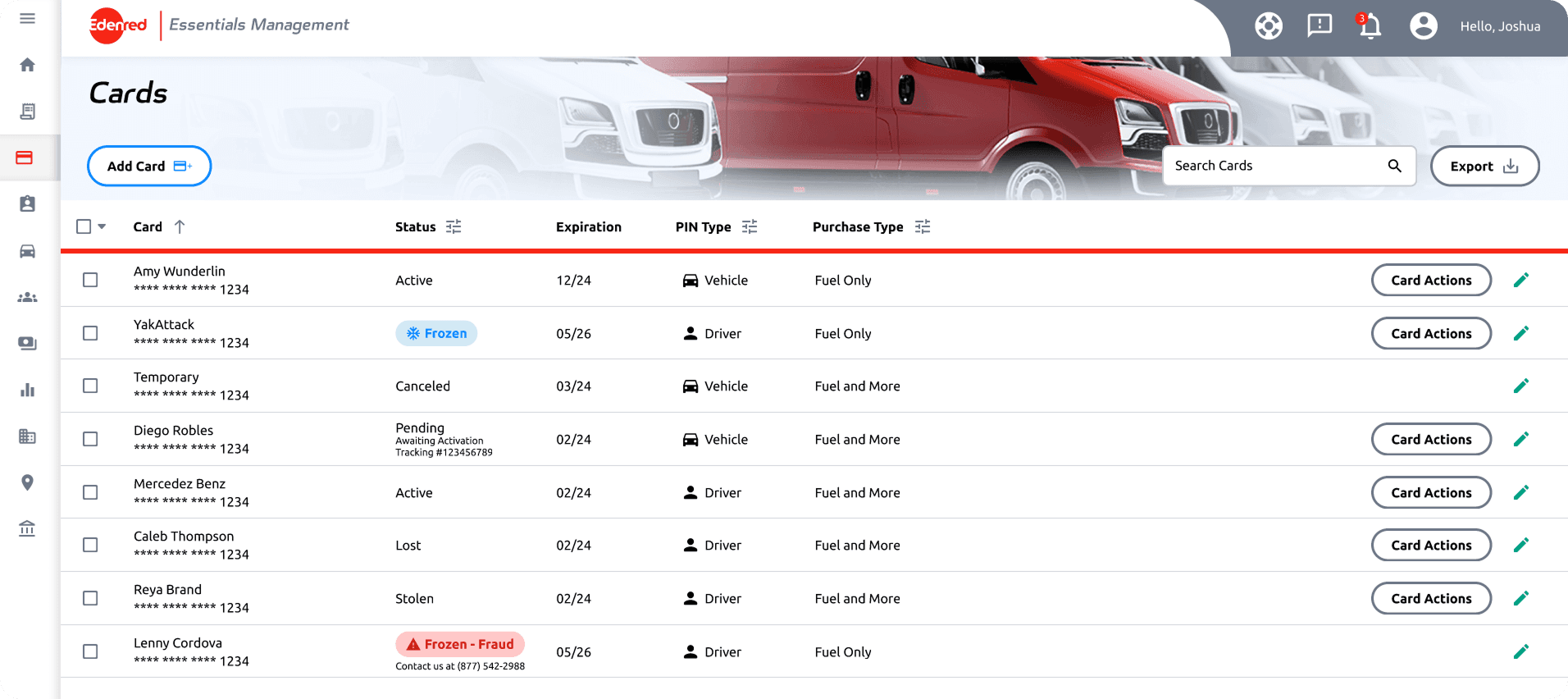
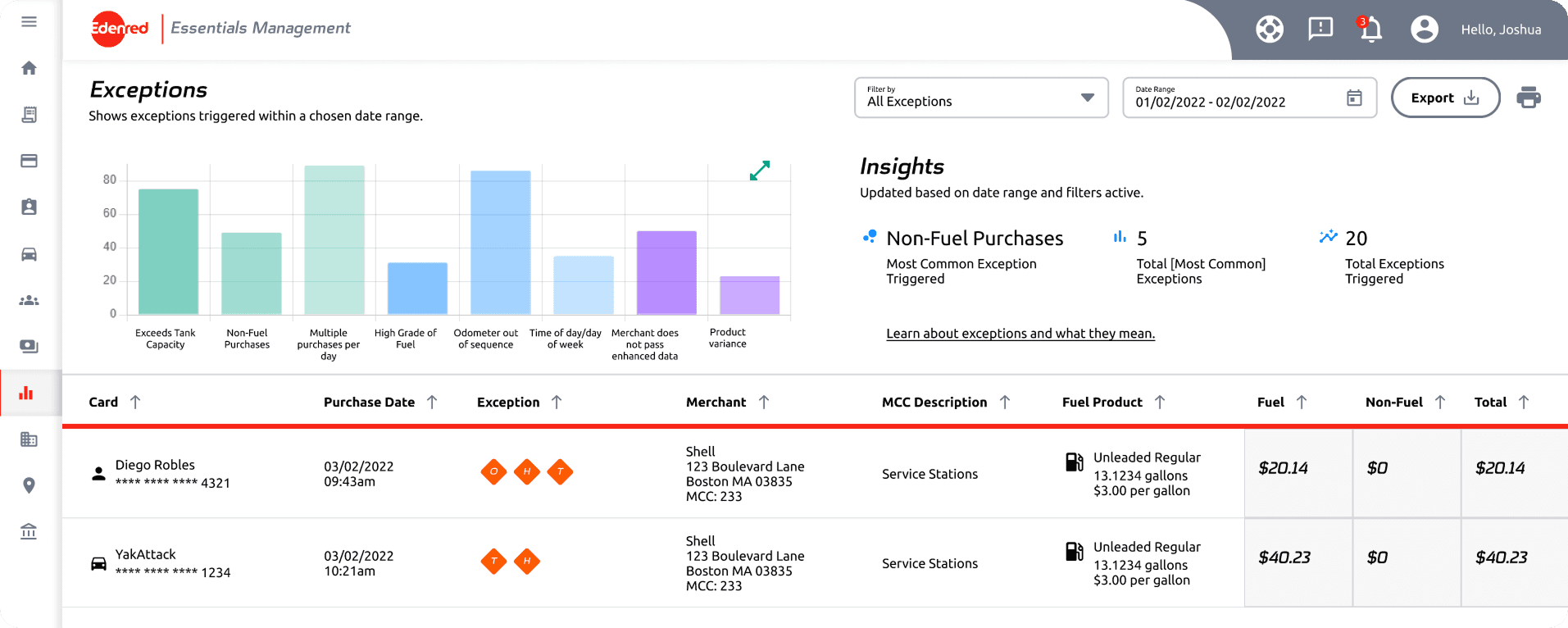
I kicked off by defining the platform’s architecture, creating a flexible shell capable of housing all fleet workflows while supporting future expansion. From there, we designed the customer-facing interface to enable real-time spending controls across fleets, while making sure the admin experience was equally scalable and intuitive.
Key steps
Design system creation: Built a shared system spanning customer and admin tools to enforce consistency and reduce rework.
Engineering alignment: Partnered closely on front-end frameworks and implementation guidance.
Iterative workflow design: Scoped features into ~2-week cycles, validating continuously with internal stakeholders and VISA.
Ongoing oversight: Ensured every component and interaction supported a coherent, seamless experience.
By combining structured iteration, strong collaboration, and a scalable system approach, we took the Fleet Card platform from concept to fully launched product in just 13 months, converting over 200 businesses and establishing Edenred as a credible player in a previously dominated market.
Lessons learned
Start with the design system (code version) and ensure engineering alignment; prevents time lost to inconsistencies
Front-end framework decisions matter—design and engineering must be fully aligned
Design oversight is ongoing; handoff is not the end of the design process