Team
Red Canary

Shipped
Q3 2025
Tags
Refactor
Strategy
Summary
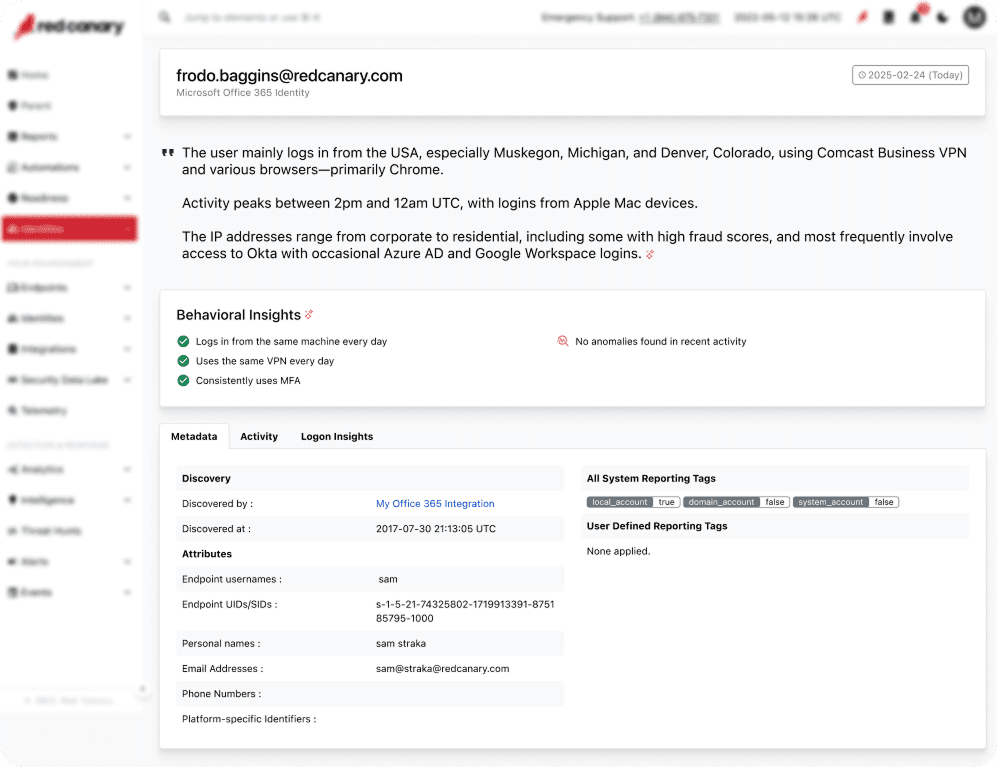
I led the redesign of Red Canary’s Identity Profiles, introducing actionable insights powered by generative AI and a modernized user experience. The update strengthened customer retention and gave us a significant competitive edge in a previously stagnant area of UX.
The problem
Our original Identity Profiles were flat-out boring. Customers found them unhelpful, and compared to competitors’ identity management tools, we were falling behind in both functionality and customer perception. We’d lost key opportunities to win on renewals because customers needed a more powerful and intuitive identity product.
"How much GenAI content is too much?"
We had an in house GenAI product that had lot of untapped potential. We could leverage it to write some pretty neat content but we struggled to decided how much was too much.




Don't make people read. Use GenAI to create brief, high value summaries only.

The solution
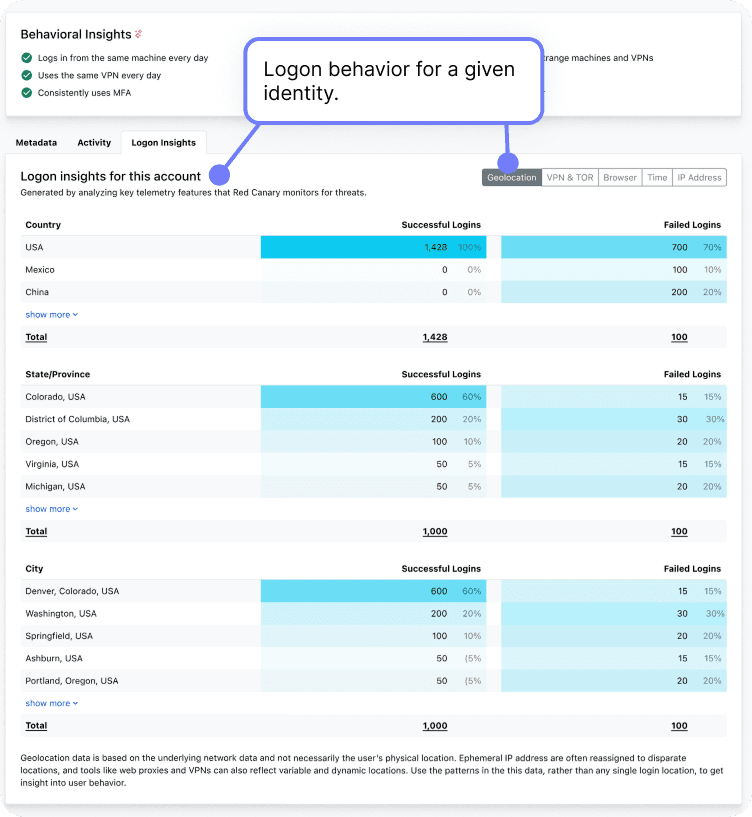
Focus on surfacing actionable insights rather than raw data:
Benchmarked competitors
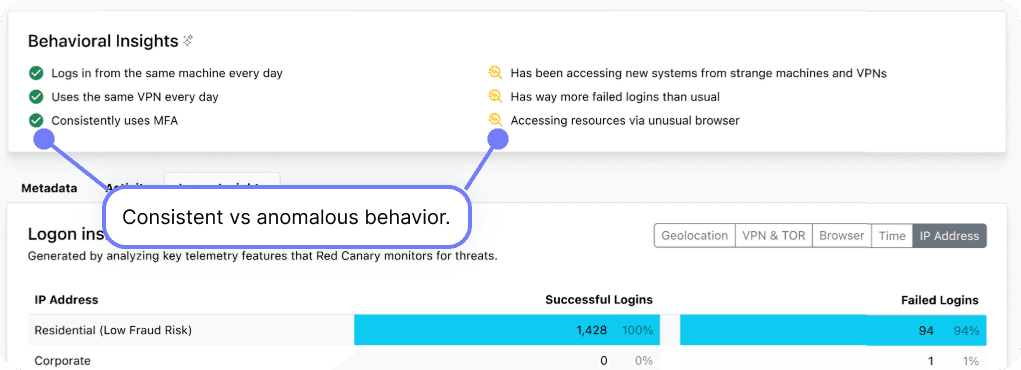
Embedded GenAI to summarize and contextualize identity activity
Prioritized clarity and actionability over exhaustive detail
What went right
We had such a wealth of data available we were spoiled for choice on what to do here with the LLM. It was nice to have that luxury and customers loved the new data.
The Identity "wrap up summaries" went over really well with leadership and customers.
Tough spots
We iterated a lot on how much was too much in regards to LLM content.
The existing content that customers were used to seeing needed to still be visible somewhere. It was tricky to find a home for it without taking away from the cool new things we added.
How we solved it
5 Months
Design phase
6
Major iterations
1
Design team size
Competitive Benchmarking
I started by thoroughly exploring “who the teams to beat were,” reverse-engineering their flows, and documenting patterns we could adapt or avoid.
This initial benchmarking gave us a clear north star of what features had to be included to meet customer expectations—and what we could skip for now.
Designing & Prototyping
I created low-fidelity prototypes to validate our direction early and avoid spinning cycles. Once we validated direction through stakeholder and pilot feedback, I transitioned to high-fidelity designs.
A major addition here was embedding GenAI functionality to provide quick, actionable identity insights directly in customer dashboards and threat timelines.
Customer-Driven Validation
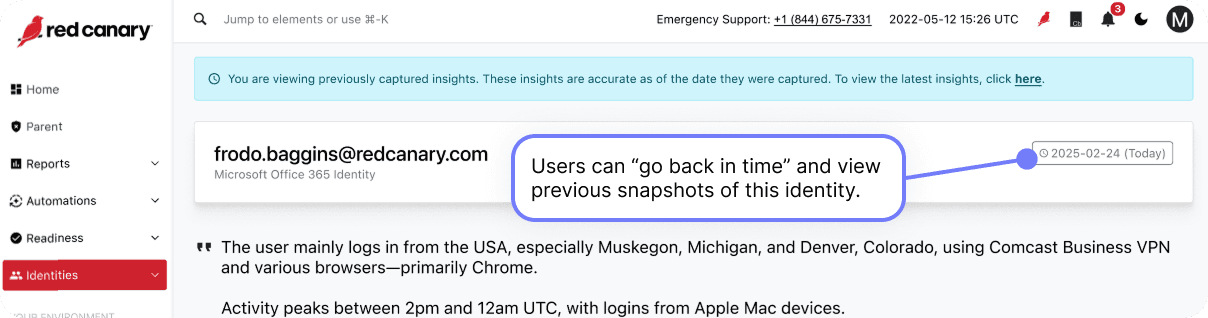
Throughout the process, we collected customer feedback and iterated heavily on our prototypes, making small but impactful changes along the way. A tiered rollout with pilot customers allowed us to gather critical data on usability before full-scale launch.
Lessons learned
When using GenAI to provide insight, keep the information concise and impactful.
Phased releases can help get the MVP out sooner and are a great tool to get early, continuous feedback from early users.