Team

Red Canary
Shipped
Q4 2024
Tags
UX Cleanup
Strategy
Summary
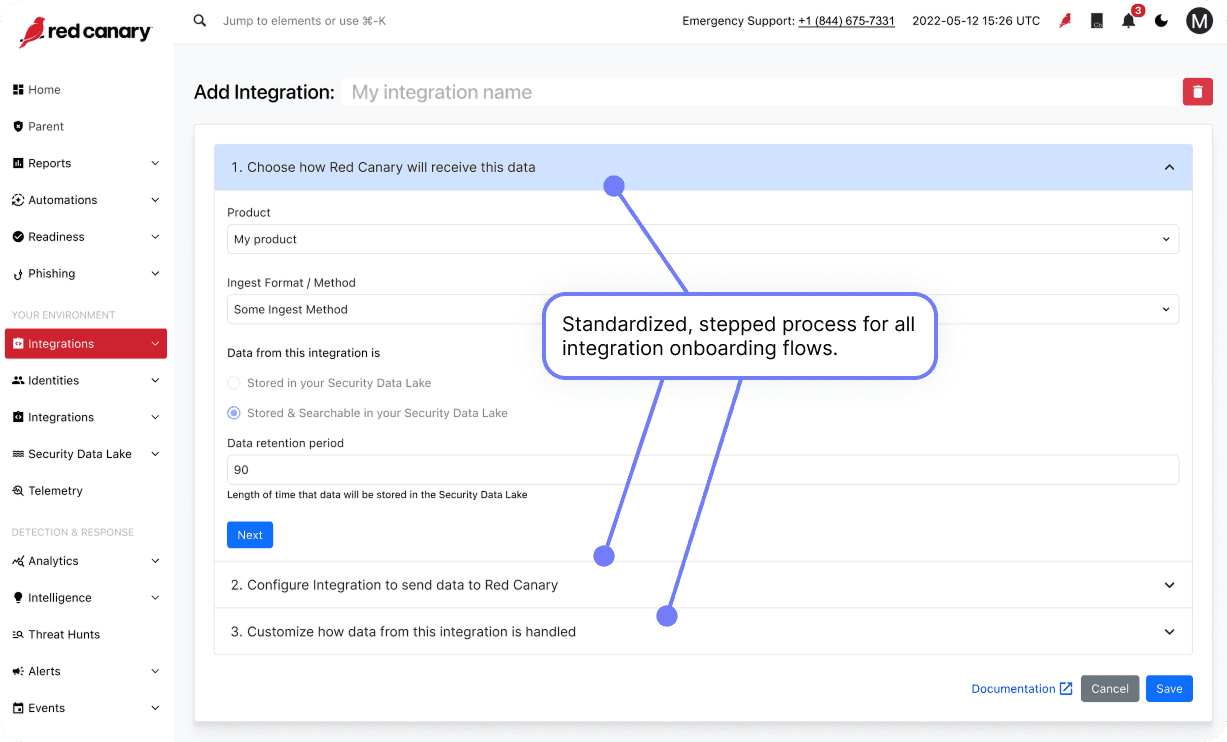
I led a platform-wide redesign of integration onboarding, creating a unified, reusable framework that standardizes workflows across all alert sources. This effort improved efficiency for customers, accelerated new integration delivery by ~20%, and reduced support overhead, while establishing a scalable foundation for future growth.
The problem
Red Canary has over 100 integrations and only about 30% of them were using the right patterns. The remaining 70% of integrations had fragmented, confusing, and inconsistent UXs that were causing a lot of confusion for our customers and eroded overall confidence in the product. We also were receiving a fair amount of support tickets that were attributed to these issues as well.
"Do we blow up scope to pay off this massive tech debt or just kick it down the road?"
The crossroads we quickly arrived at was can we afford to blow up scope on this to fix the underlying UX issue(s) or do we address it later. It would mean an extra 2 months of engineering time if we paid off the debt.




Blow up scope and fix the problem for good
The solution
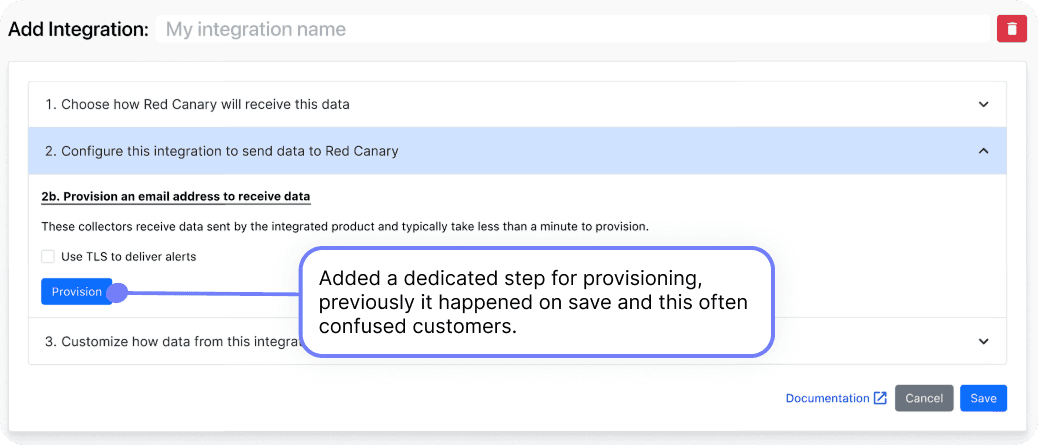
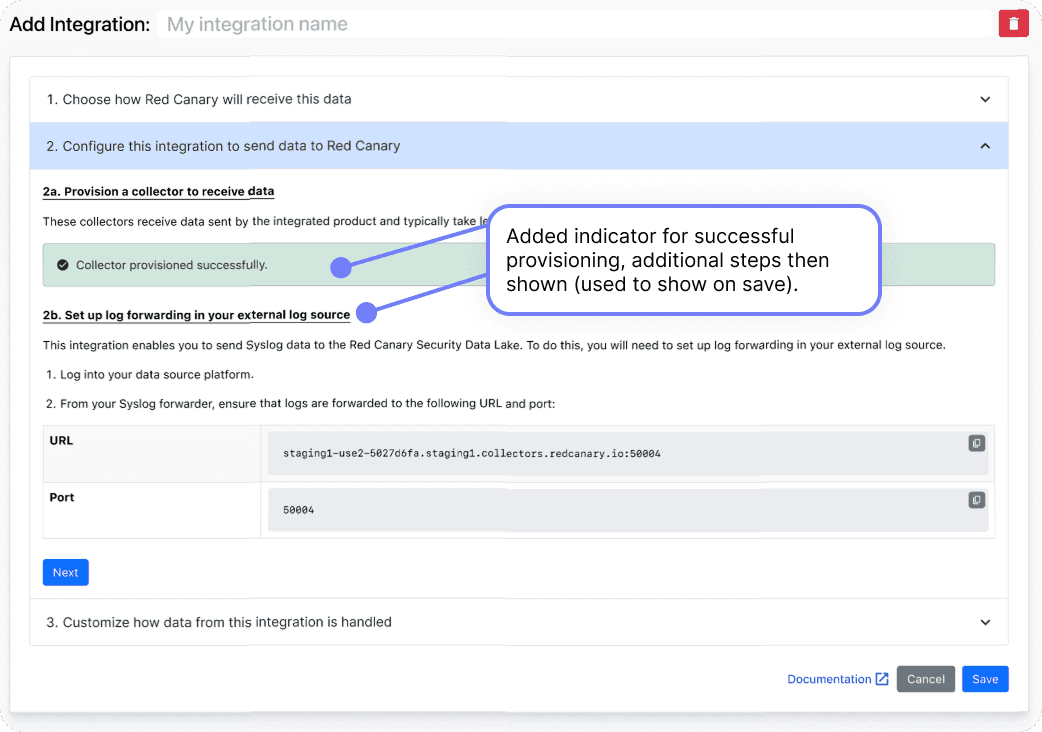
Unified all integration onboarding experiences into a single, predictable, user-friendly workflow. Created reusable design patterns and frameworks for consistency and scalability. Collaborated with PMs and engineers to define standards that could be applied across multiple products, making onboarding repeatable and maintainable at scale.
What went right
We plugged some massive UX loopholes and unified to onboarding experience across all integrations!
Testing and rollout went surprisingly smooth.
Tough spots
I belw up scope here to a HUGE degree.
Spent all my political capital (it comes back easy enough).
Getting engineering and PM onboard with the scope change.
How we solved it
8 Weeks
Project time
5
Major iterations
14
Team size
How we started
To solve this problem, we needed to do a few things before we even touched figma. To start, we needed to map out all of the different types of integrations and categorize their flows. Some would fit into the “good” pattern that we want to proliferate, others fit into “bad” 1-off patterns or outdated versions that we needed to sunset. This was arguably the hardest part of the whole project.
Map it all out first
After we had our mapping done, the next phase was to dig into the “bad” flows and figure out how we can fit them into our new gold-standard. Some integrations would translate really well, while others would need a lot more finessing in order for them to make sense in their new home. The key goal here was to ensure that these integrations still felt familiar, and customers who were already used to these “bad” patterns would still be able to make sense of them once we standardized them. We had to test this quite a bit both internally and externally to make sure we got it right.
Now we can finally design! Since this project is a migration, we already knew what the rough UX should look like here. We had our gold-standard experience that we’re applying here, so all that's left is to start mocking things up. The goal here was to give engineering enough variety so that all the different use cases were covered.
Handoff
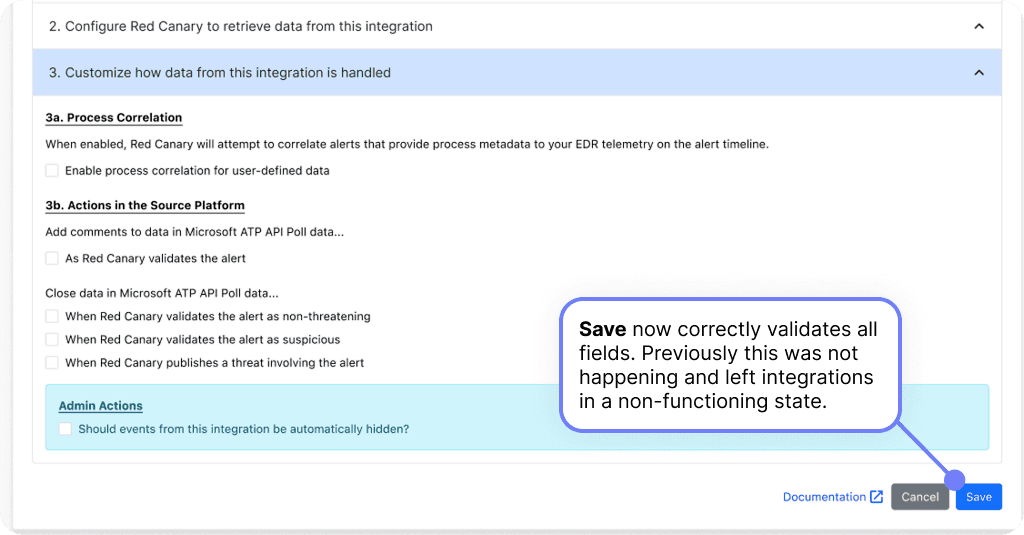
For projects of this scale, the engineering handoff is very hands-on. My mission was to have frequent check-ins with the developers to make sure the different variations were all correct and using the right design components. We would compare this to the existing integrations that were already using the right patterns as a sanity check. Overall this part went surprisingly well, we hit a couple snags along the way in terms of QA, there were so many integrations to go through it's easy to miss the little things (looking at you field hints).
Lessons learned
Know when to expand scope. Sometimes what's written in the epic doesn't fully solve the problem and deliver the best experience.
When making big, systemic changes, be thorough and shop it around to as many folks as possible. You never know what you might have missed.
Slow roll the release if you need to. It's alright to roll out big changes slowly and catch any use cases/bugs you might have missed earlier.